Why Vehicle Decontamination Matters
Even after a thorough wash, a vehicle is rarely completely clean. A safe pre-wash and contact wash will remove visible dirt, traffic film and road grime, but bonded contamination often remains attached to the surface. Iron particles, industrial fallout, tar deposits and adhesive residues can gradually build up on paintwork, wheels and glass, reducing gloss and leaving the finish feeling rough to the touch.
This is where proper decontamination becomes an important part of vehicle care. While a good pre-wash helps remove loose contamination before contact washing, bonded particles usually require dedicated decontamination products to restore a smoother, cleaner surface.
Many vehicle owners only notice the problem when paintwork no longer feels slick after washing, or when protection products stop performing as well as expected. By removing contamination that normal washing cannot address, decontamination helps improve gloss, surface feel and the performance of waxes, sealants and ceramic coatings applied afterwards.
Contamination Builds Up on Every Vehicle
Every journey exposes a vehicle to contamination. Brake systems release tiny metallic particles, road surfaces leave behind tar and asphalt residue, and industrial environments can cover vehicles in airborne fallout. These contaminants may be difficult to see at first, but over time they bond to exterior surfaces and gradually affect the appearance and condition of the vehicle.
Even vehicles that are washed regularly can suffer from bonded contamination. A lubricating car shampoo is essential for safe contact washing, but shampoo alone is not designed to dissolve iron fallout, tar spots or adhesive residues that have become attached to the surface.
This is why decontamination is often the missing step between washing and protection. It bridges the gap between a vehicle that looks clean from a distance and one that feels properly clean when you run your hand across the paintwork.
Iron Fallout and Metallic Contamination
One of the most common forms of bonded contamination is iron fallout. These tiny metallic particles often come from brake dust, rail dust and industrial activity. Once airborne, they settle onto paintwork, wheels and glass, where they gradually embed themselves into the surface.
On lighter paint colours, iron contamination can sometimes appear as small rust-coloured specks. On darker vehicles, it may be less visible, but it can still affect surface smoothness, gloss and protection performance.
An iron remover is designed to react with these metallic particles and dissolve them so they can be safely rinsed away. This makes iron removal one of the most valuable stages of a complete decontamination process, especially before polishing or applying new protection.
Why Wheels Often Need Extra Attention
Wheels are usually exposed to the highest concentration of iron contamination. Brake dust, road grime, salt and heat all combine to create a challenging environment, especially on vehicles that are driven daily or fitted with performance braking systems.
Regular use of dedicated wheel cleaners helps break down heavy contamination before it becomes more difficult to remove. When combined with periodic iron removal, this helps maintain the appearance of painted, polished and coated wheel finishes.
Clean wheels have a major impact on the overall appearance of a vehicle. Even freshly washed paintwork can look unfinished if the wheels remain dull, stained or covered in embedded brake dust.
Tar Deposits and Sticky Road Contamination
Iron contamination is only one part of the problem. Tar deposits, asphalt residue and sticky road grime are also common, especially on lower body panels, bumpers, wheel arches and rear sections of the vehicle.
These contaminants are often difficult to remove through washing alone because they bond tightly to the surface. Scrubbing them aggressively can increase the risk of marring or damaging delicate finishes, which is why chemical removal is usually the safer approach.
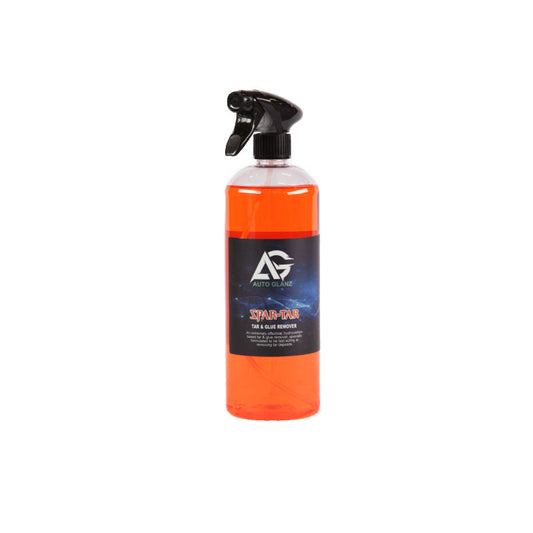
A tar remover is designed to soften and dissolve these deposits, allowing them to be removed with minimal physical effort. This makes it particularly useful after winter driving, motorway use or journeys through freshly repaired road surfaces.
Adhesive Residue and Glue Removal
Decontamination is not only about removing road grime and fallout. Vehicles can also be affected by adhesive residues left behind by stickers, badges, tape, protective films or temporary graphics.
A tar and glue remover provides additional versatility because it can help break down sticky residues that would otherwise require excessive rubbing. This is especially useful for enthusiasts and professional detailers working on vehicles that have had decals, dealer stickers or old number plate adhesive removed.
By dissolving the residue chemically, the surface can be cleaned more safely and efficiently while reducing the need for aggressive mechanical action.
Preparing Paintwork for Protection
One of the biggest benefits of decontamination is the way it prepares surfaces for protection. Whether you prefer a quick maintenance product or a more durable coating, protection performs best when it bonds to a properly cleaned surface.
Contamination creates a barrier between the paintwork and the product being applied. This can reduce durability, affect water behaviour and prevent the finish from looking as good as it should.
After decontamination, many enthusiasts apply a quick layer of protection with spray sealants for easy maintenance, while others prefer the longer-lasting performance of a ceramic coating. Traditional waxes also perform more consistently when applied to paintwork that has been properly cleaned and prepared.
Decontamination Before Polishing
Polishing should always begin with clean, properly prepared paintwork. If bonded contamination remains on the surface, polishing pads can drag those particles across the paint, reducing efficiency and potentially introducing new defects.
Before using products from a polishing range, removing iron fallout, tar spots and other bonded contaminants creates a cleaner working surface. This allows pads and compounds to perform more consistently and helps maximise the clarity and gloss achieved during correction work.
For anyone carrying out machine polishing, decontamination is not an optional extra. It is part of the preparation that helps ensure the final result is as clean, clear and refined as possible.
Smoother Paintwork Gives Better Results
One of the easiest ways to identify contamination is by touch. Paintwork can look clean after washing but still feel rough, gritty or slightly uneven. This often indicates that bonded contamination remains attached to the surface.
After a proper decontamination process, paintwork usually feels noticeably smoother. This smoother surface reflects light more evenly, improves gloss and helps water behave more consistently when protection is applied.
The difference is especially noticeable on vehicles that have not been decontaminated for several months. A surface that previously felt dull or rough can quickly feel much cleaner and more refined.
How Decontamination Fits Into a Wash Routine
Decontamination works best as part of a complete exterior care process. A typical routine begins with pre-washing to remove loose contamination, followed by a contact wash to clean the remaining dirt safely from the surface.
Once the vehicle is clean, iron removers and tar removers can target the bonded contamination that remains. This staged approach allows each product to focus on a specific type of contamination, making the entire process safer and more effective.
For vehicles exposed to heavy road grime, brake dust or winter conditions, decontamination can make a significant difference to both appearance and future maintenance. It also helps ensure that protective products are being applied to the cleanest possible surface.
When Should You Decontaminate a Vehicle?
The ideal frequency depends on how and where the vehicle is used. Daily driven vehicles, cars used in heavy traffic, vehicles parked near industrial areas and cars exposed to winter road salt will usually need decontamination more often than lightly used weekend vehicles.
Many enthusiasts carry out a full decontamination process a few times per year, especially before applying fresh protection or carrying out polishing work. Others use targeted decontamination when specific issues appear, such as tar spots on lower panels or visible iron fallout on wheels and paintwork.
The key is to treat decontamination as a preparation stage rather than a last resort. Removing contamination before it builds up heavily makes the process easier and helps maintain the vehicle to a higher standard over time.
Why Choose Auto Glanz Decontamination Products?
Auto Glanz decontamination products are developed for enthusiasts and professionals who want effective contamination removal without unnecessary complexity. Whether the issue is embedded iron fallout, stubborn tar spots or adhesive residue, the range provides solutions designed to restore a cleaner and smoother surface.
Used correctly, iron removers, fallout removers and tar and glue removers help improve the appearance, feel and performance of exterior surfaces. They also make every later stage of detailing more effective, from polishing to protection.
If your paintwork feels rough after washing, your wheels are affected by stubborn brake dust or your protection products no longer perform as expected, decontamination could be the step your routine is missing.
Restore a Cleaner, Smoother Finish
Washing removes visible dirt, but bonded contamination requires a more targeted approach. Iron fallout, industrial contamination, tar spots and adhesive residues can all affect the way a vehicle looks, feels and performs.
By adding decontamination to your detailing routine, you create a cleaner foundation for polishing and protection while helping maintain gloss, smoothness and long-term surface condition.
For any enthusiast or professional detailer looking to achieve a properly prepared finish, decontamination remains one of the most important stages in exterior vehicle care.
Frequently Asked Questions
Disclaimer: This content has been created with the assistance of artificial intelligence. While every effort has been made to ensure the information is accurate and up to date, occasional inaccuracies or omissions may occur.

 Link label